Hanukkah in the New Testament
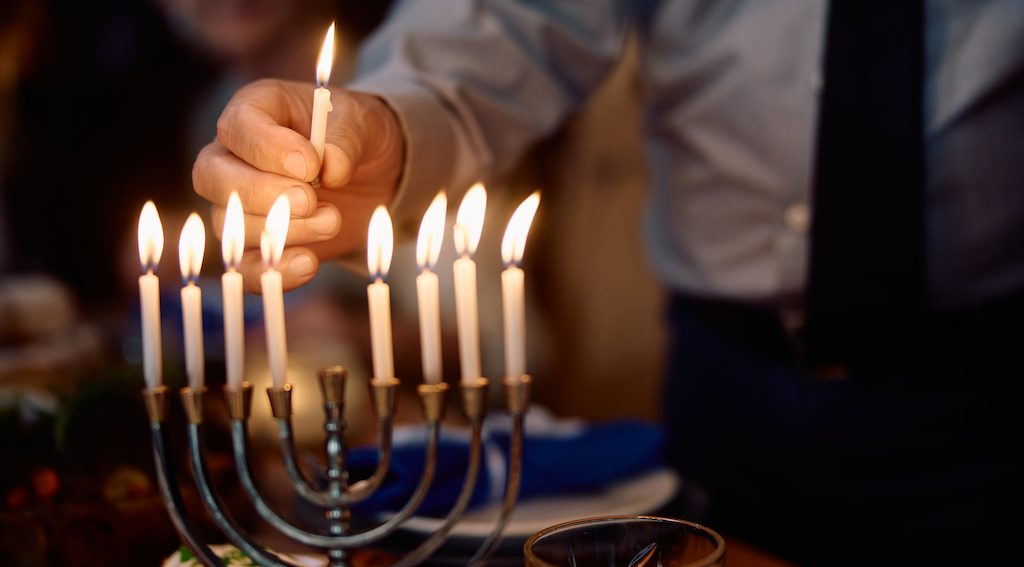 Lighting the candles on the last eve of Hanukkah. | Photo: Shutterstock
On the 25th of Kislev in the year 3622 since creation (according to the Jewish calendar), the Maccabees liberated the temple, which had been desecrated by the Greek rulers for three and a half years. The temple was cleansed and worship was restored.
Hanukkah is the only Jewish festival mentioned in the New Testament but not in the Old Testament, although the Old Testament does refer to the historical circumstances.
Jesus was in the temple on the Feast of Dedication and it was winter (John 10:22). That is Hanukkah.
Jesus emphasises the importance of the temple by being there at the feast. For He Himself calls the Temple the “House of My Father”. The Temple is the place where God allows Himself to be encountered. When Jesus, the Son of Man, is in the temple, in the House of the Father, at this feast, it creates expectations. The tension is palpable: “How long will you keep us in suspense? If you are the Messiah, the promised King, tell us plainly.” Jesus does not tell them plainly—not yet. The Church and Israel have had to endure this tension ever since the cross and resurrection. Jesus’ works bear witness to Him. But there is still one last thing, for which the cross and resurrection are the guarantee in the New Testament. We read about that in Daniel 7 and Jesus mentions it in Matthew 24: “The Son of Man is coming with the clouds of heaven”.
Daniel sees a vision that sends shivers down his spine. What does he see?
Four living creatures, four different ‘animals’, emerge from the sea. The sea is a symbol of the world of nations. Each animal represents one of the great powers of that time.
The fourth animal manifests itself in all its cruelty and horror; it looks terrifying with its iron teeth and bronze claws. And it has its sights set on the ‘saints of the Most High’, on Israel.
Daniel asks for details about the vision. What is the beast? For he had seen that it had ten horns, three fell, and another replaced them. And that horn spoke. Or rather, it roared and bellowed blasphemous language. It wages war against Israel and prevails—initially. For there is a limit to its power. Until! Until the Ancient of Days comes. God Himself sets limits on the powers.
It concerns the Greek king Antiochus IV Epiphanes, in the first half of the second century BC, who wanted to turn his empire into a single people, culture and religion, under one king, himself, and who claimed divine honour for himself. What did he do? He banned the Torah, circumcision and temple service. And he placed a statue of the Greek supreme god Zeus—perhaps also associated with Baal—in the temple. Daniel calls this the “abomination that causes desolation” that was placed in the temple (Daniel 11). He instituted a monthly feast day in honour of himself. He changed the times, broke the covenant and stopped the sacrificial service.
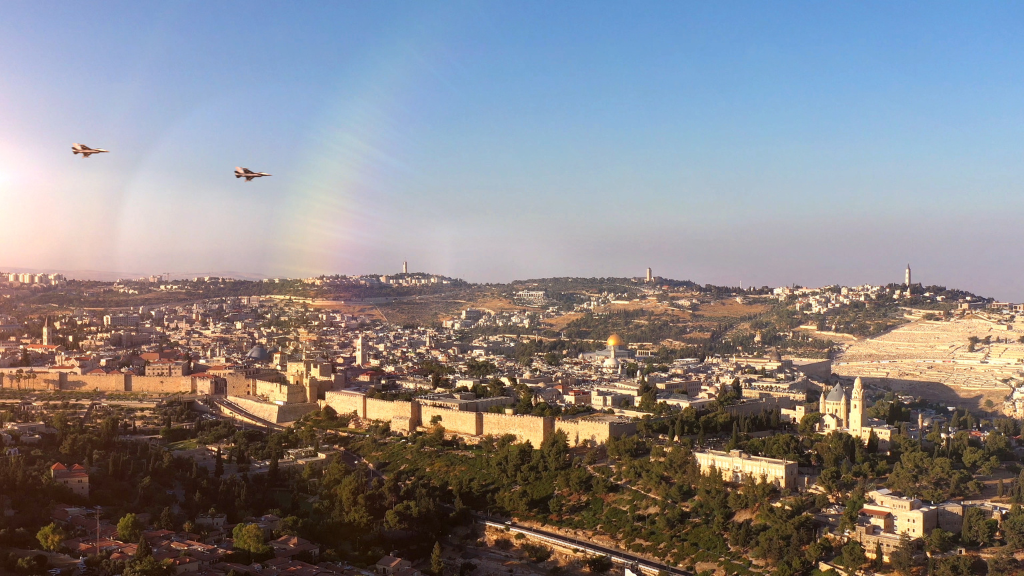
The Maccabees rebelled against this king. They ultimately succeeded in driving out his occupying army, liberating Jerusalem and the temple, and restoring temple service. All in all, this took three and a half years—in terms of Daniel’s vision: time, times and half a time.
That is why Jesus is in the temple that winter. And now we feel the tension. Because that last part of Daniel’s vision and explanation: the eternal kingship for Israel, that is still not there. Yes, the Maccabees ruled for about 150 years. But their power was also corrupted. It was still not the promised eternal kingdom of the Messiah.
Then there is Jesus. His deeds testify to Him. Everyone agrees on that. He Himself testifies that He is the Son of Man from heavenly glory: “I and the Father are one.” Then it comes down to faith. To recognition. It becomes very exciting.
The Son of Man has come, and will come, as He said, with the clouds of heaven. We have been living in that excitement since the cross and the resurrection. Will 2026 be the year of His coming?
Hanukkah begins on Sunday evening, 14 December, and lasts until Monday, 22 December 2025.

Why Israel? by Rev. Willem Glashouwer
Order the book