“I Have Called You By Name”
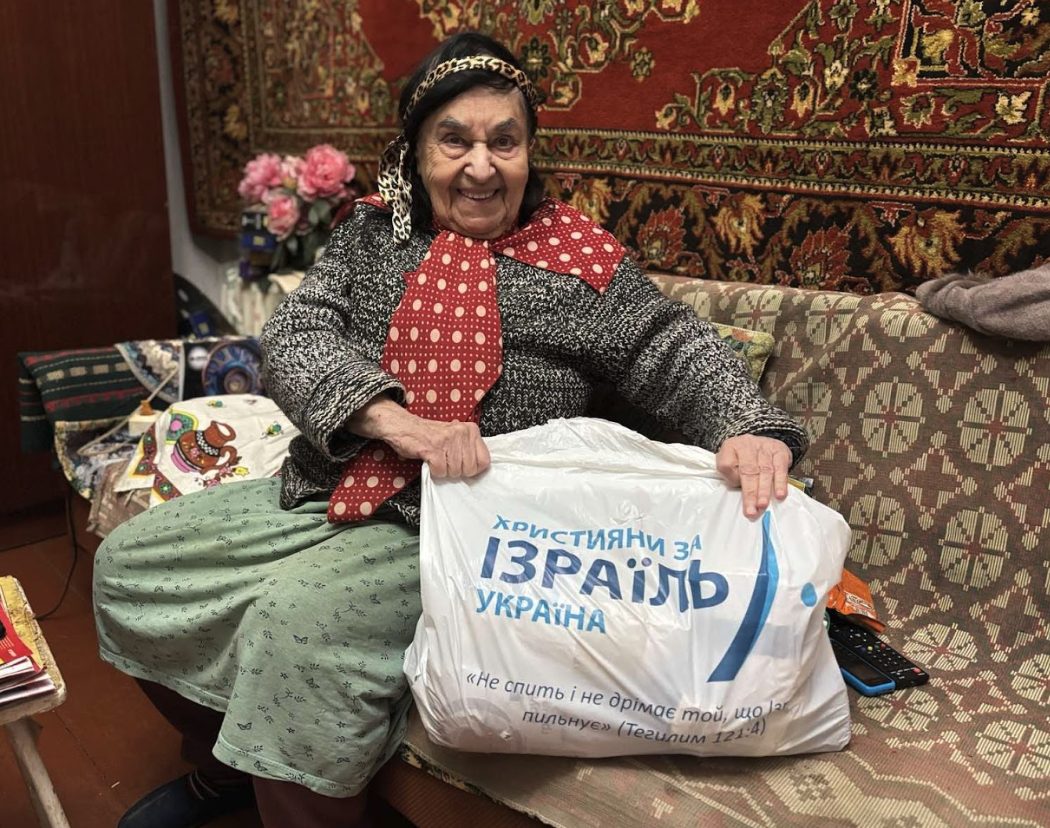
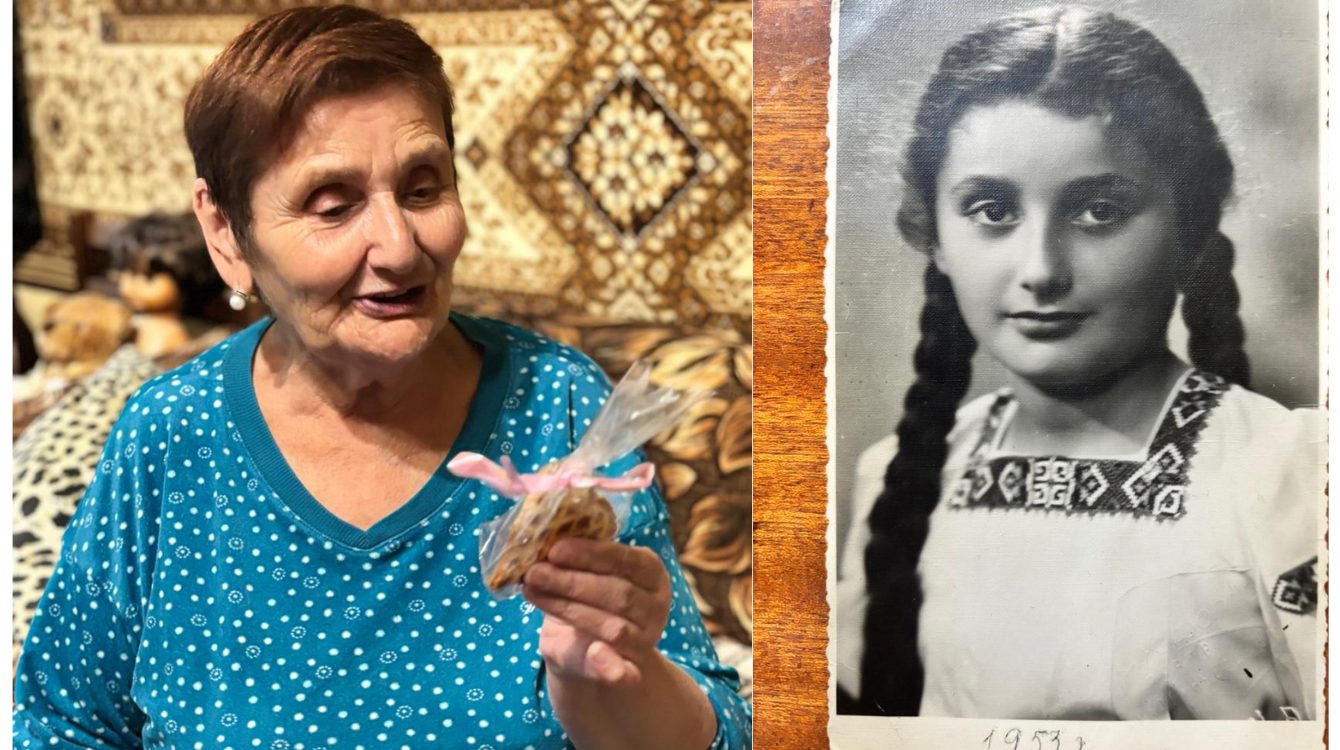 Natasha never learned her real name. Her parents were murdered
in the Holocaust after she was born. | Photos: C4I
Natasha never learned her real name. Her parents were murdered
in the Holocaust after she was born. | Photos: C4I
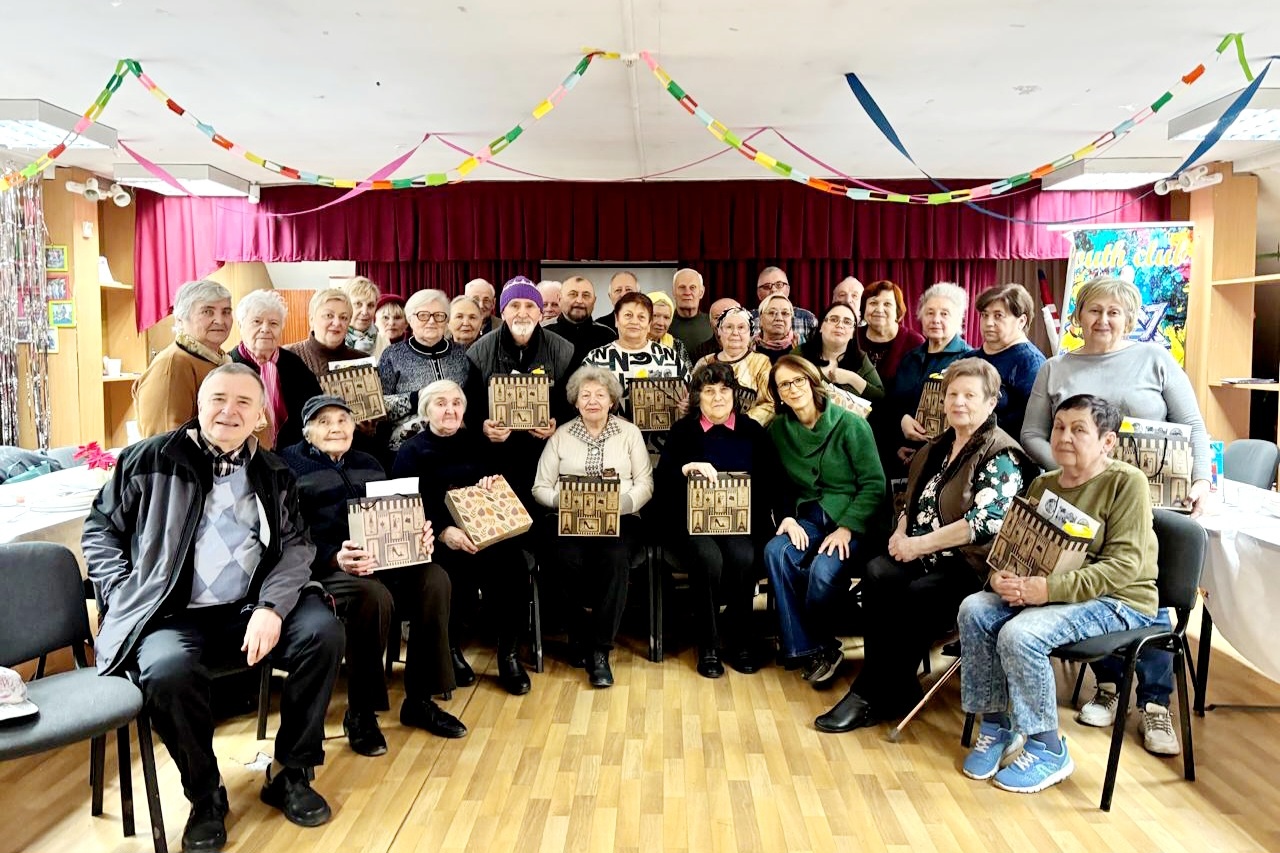
The Bible highlights three groups who receive God’s special care: orphans, widows, and strangers. Among Holocaust survivors in Ukraine, many were orphaned during the Shoah and are now widowed. Since the 2022 war, many have also become ‘strangers,’ fleeing the east to the Lviv region, which our staff visited in the fall.
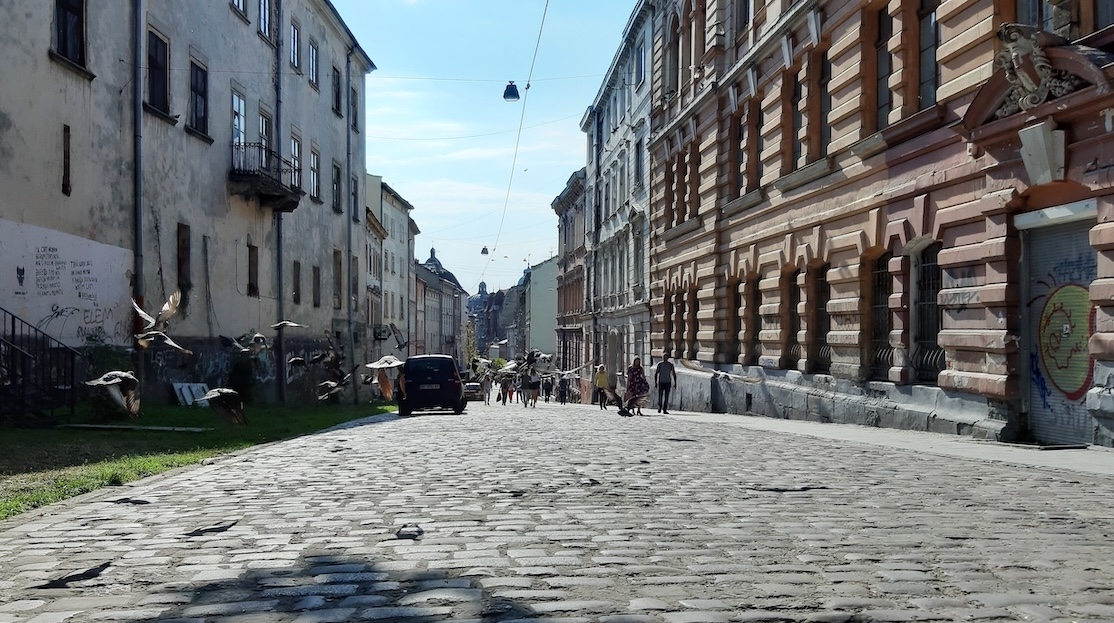
Lviv… Lwow… Lemberg. A great city, a strange mix of Russian and Ukrainian, of Polish, Jewish and Soviet history, European architecture, and Austrian coffee house culture, when Lemberg was the northeastern outpost of the Austro-Hungarian Empire.
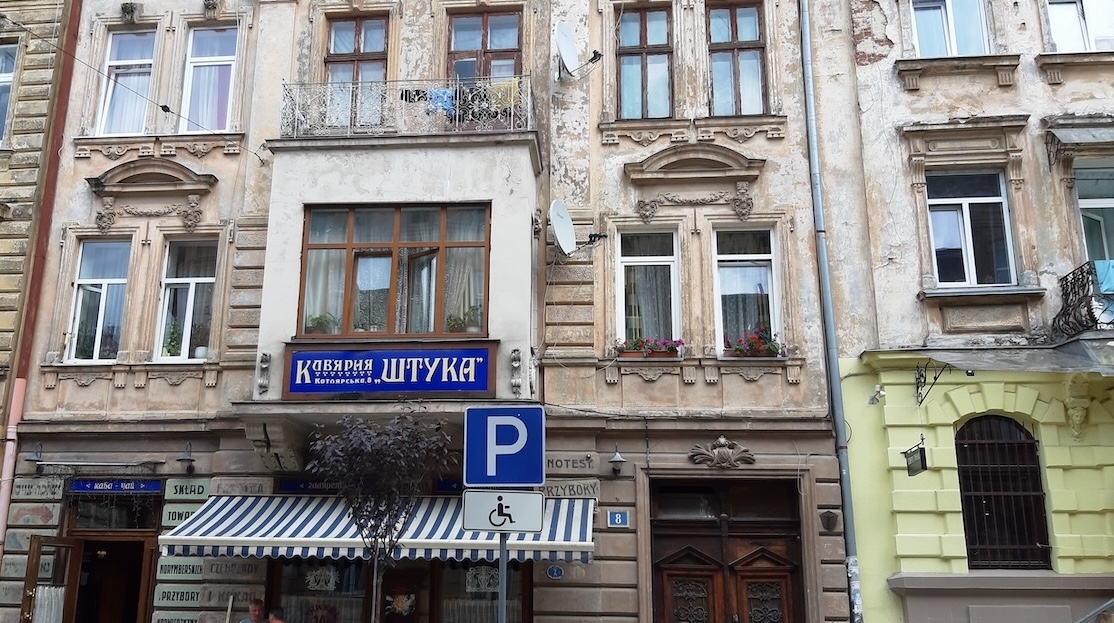
Where are the Holocaust Survivors?
We learn that only about a dozen Holocaust survivors remain in the entire region. How can that be? Before the war, 100,000 Jews lived in Lviv—then part of Poland—and another 50,000 refugees arrived after the German invasion. I’m still trying to grasp the full picture. The devastation of the Holocaust here is unmistakable, and Olga Lidovskaya, who runs the small Jewish museum at the Hesed social welfare center, helps me understand more.
The Soviet occupation of Polish western Ukraine after the Hitler–Stalin Pact in 1939 brought imprisonment and re-education camps for the city’s entire leadership. When Germany invaded two years later, those prisoners were summarily executed. Little was done to save lives in this politically suspect, newly annexed region: no factories to evacuate for the war effort, no evakuatsia for Jewish workers, and no remote villages to hide in.
“The young men were drafted into the Red Army, but at the next opportunity they went home again—except for the Jews, who knew what was waiting for them,” explains Olga. “After what the city had gone through at the hands of the Soviet leadership, people were not afraid of the Germans. Shortly after the occupation of the city, the Jews were forced to remove the bodies of inmates murdered by the Soviet leadership from the prisons. These images were then used to incite the population against the Jews.”
By early July 1941, when the Wehrmacht had not even advanced into most of Ukraine, 6,000 Jews had already been murdered in Lviv—by local residents. A ghetto followed in November 1941, then the murder of thousands of Jews—Yanovska within the city, or Belzec, until early 1943.
After 1945, eastern Poland became western Ukraine, and over a million Poles were deported. Jewish life in other Ukrainian cities persisted in the thousands, but Lviv had only 800 registered Jews—just 200 of them local.
Krystina? Or Natasha?
Natasha welcomes us with the utmost friendliness and leads us into her antiquated apartment. She smiles with great joy at her guests, the flowers, and the thoughtful gifts. She radiates such kindness and lightheartedness that one must assume life has always been kind to her.
“I only have photos from after the war, when I was already four,” says Natasha. “I had such eyes… here, look. I love this old photo.” When the photo was taken, Natasha was called Krystina. That was the name she was given when she was admitted to the orphanage, she tells us. Natasha is the name her adoptive parents gave her. But before that, what was before?
“What is my original name? I have no idea. I don’t even know my surname”
“I don’t know,” Natasha says, hard to believe. “I only found out about all this much later, in first grade! People told me I was Jewish. Back then, people didn’t talk about nationality. I was friends with a blonde Ukrainian girl. Her mother told me what I know. I was born in 1941. My parents were both Jewish, that’s what this woman told me. My dad must have been a Polish Jew, a professor. Shortly after I was born, my parents must have been murdered, and I ended up in an orphanage. When I was four, I was adopted by a Russian-Tatar couple.” Natasha survived the war relatively unscathed in the orphanage.
Natasha has been searching her whole life. She didn’t dare ask her adoptive mother. Such topics were taboo in society. But later, she searched every archive she could think of with her son-in-law—laboriously and unsuccessfully.
“What is my original name? I have no idea. I don’t even know my surname. I don’t know what my parents’ names were. Can you imagine going through life like that? Not knowing who you are?” My gaze falls on the card in my hand, handwritten by Doris for the survivors, with the scripture from Isaiah 43: “I have called you by name, you are mine.”
Alexey
The drive to Alexey’s place takes two hours from the regional capital of Lviv further west to near the Polish border; the Carpathian Mountains form a beautiful silhouette in the distance. The last stretch of road to the village of Vola Yakubova near Drohobych is just a dirt road. Once a week, a mobile corner shop drives through the village and supplies the residents. Here, at the opposite end of Ukraine, Alexey and his wife Anya found refuge when their hometown of Kharkiv was attacked by Russian missiles.
“If I have to cry, just ignore it,” Alexey advises us right at the start. “All the windows in our house in Kharkiv were broken during the very first attack.”
Then the Germans Came
His story begins in 1939 in a small Russian village across the border—without his grandparents. They were murdered in 1918 when the Ukrainian Haidamaks carried out a massacre of Jews in the wake of World War I. Father Abraham and his four siblings grew up as orphans. Alexey was barely born when his father went to the front.
“My parents? I only saw them during the holidays”
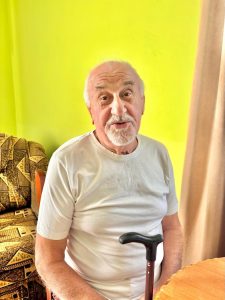
Alexey’s life is a series of misfortunes. He is overwhelmed
by the fact that this visit is so different from what he expected | Photo: C4I
“I can remember most of it clearly,” says Alexey. “First came the Romanians, then the Hungarians, then the Czechs, and then the Germans.” From then on, at the latest, he lived in constant danger. “I spent most of my time with my grandmother. My mother had to dig trenches. It was war, after all; she was hardly ever at home. When there were raids, Grandma hid me under her skirt. I had to sit in the basement for a year when it got too dangerous. I got very sick.”
But how did they survive? Did no one betray them? Was a ghetto set up in the village? “How should I know, I was four years old when the war ended. There were Jews everywhere. When they hanged Yasha—was he a Jew? I have no idea, but it’s quite possible. They were rampaging everywhere.” Alexey is fighting back tears the whole time.
“That’s where I learned German as a little boy, from the Germans. When we fled to Austria two years ago, I understood a lot. And now you’re here. Just ask, I’ll tell you everything. I’ve been waiting for you for 80 years.”
Grown Up At 12
At 12, Alexey’s childhood was over—he was sent to the Donbass to work in the mines. “What else could I do?” Alexey exclaims. “I had to learn somewhere. My parents? I only saw them during the holidays. That’s it. I won’t say any more.”
Our contact had warned us not to ask about the children. When Alexey recites a poem he wrote himself —a touching declaration of love from a father to his daughter—we understand that he is talking about his own daughter, whom he buried at the age of 18. His son was already dead when he was born—he had the umbilical cord wrapped around his neck.
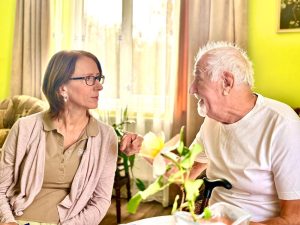
Anemone and Alexey | Photo: C4I
Inside, I cry out to God, the God who vindicates widows, orphans, and bereaved parents. Alexey pauses repeatedly, looking at us in amazement. Then he says, “I didn’t expect a visit like this! I thought some officials would come and check how I live. But this encounter with you… Stay a little longer. Would you like some coffee? I’ve been waiting for you for 80 years!”
When I hand him the heart-shaped waffle from my mother, Alexey is deeply moved. “She prays for us Jews? Tell her to pray that we will see each other again, please!” Alexey laughs with joy when I hand him the hand- knitted socks from Germany. And when we wrap his wife in her new shawl.
“Please, leave me your number,” Alexey asks. “When are you coming back? As soon as possible? Really?” Alexey has another dream: “I want to go to Israel. For one reason only: I would go to the Wailing Wall to cry and pray for my whole family.”
You can support first- or second-generation Holocaust survivors in Ukraine and Moldova through Christians for Israel. Our workers on the ground make sure that the help arrives and that the message of love is conveyed during personal visits. Any amount is welcome!
Support in €
Support in US $

Why Israel? by Rev. Willem Glashouwer
Order the book