Pesach in Time of War
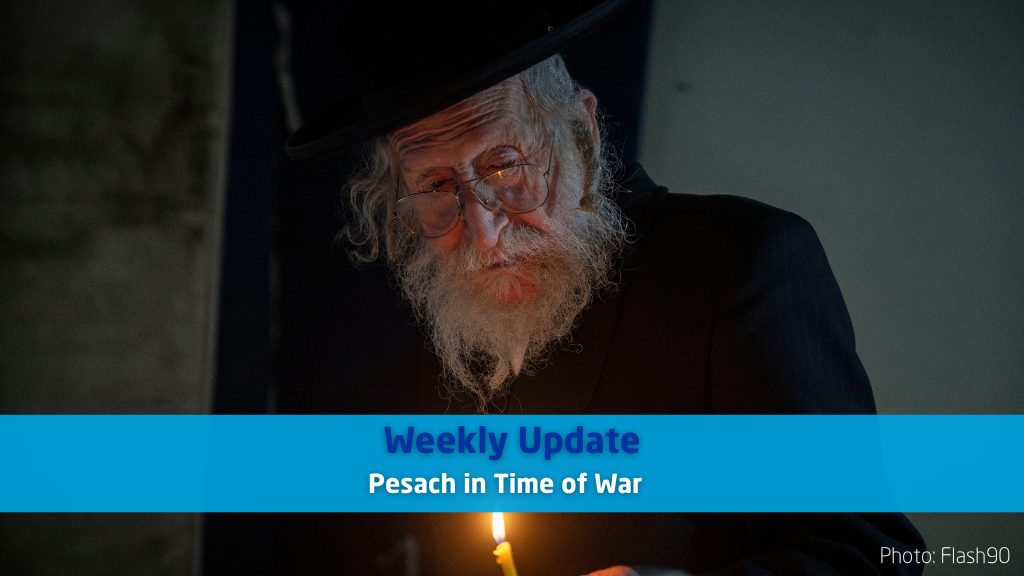
Today, the Jewish people prepare to celebrate Pesach. In the coming days, Christians will celebrate Easter.
Pesach recalls the liberation of the Jewish nation from the slavery of Egypt, when each household was required to slaughter an unblemished lamb and paint its blood on the doorposts. Easter recalls Christian belief in the liberation of all mankind from the slavery of sin, through the sacrifice of the Lamb of God, and His resurrection from the dead.
This year the Jewish festival of Pesach starts on Wednesday April 1, and ends on April 9. In the Eastern (Orthodox) churches, Easter (Pascha) will be celebrated on Sunday, April 12, 2026, while the Western (Catholic/Protestant) churches celebrate Easter on April 5, 2026.
The differences in dates result from the different traditions that developed concerning the choice of calendars and liturgical practices. They are a sad reflection of the separation between the Jewish people and the church, on the one hand, and on the other hand the division between the Eastern and Western Christian churches.
Altogether, it must be displeasing to the Lord that these divisions persist. They are a sign that we are still in a broken condition, awaiting the coming of God’s Kingdom in its fulness. The fact is that Jesus died in Jerusalem on the Jewish Passover (Pesach), and rose “on the third day”. As Christians, it is important to remember that, whatever traditions may have developed over the centuries, our faith is firmly rooted in God’s covenant dealings with His people Israel. His word, promises and covenants are true, unchanging and eternal. Gentile Christians have been added to the Jewish people. The Church did not replace Israel. Easter has not replaced Pesach. We should rejoice in the belief that, one day, all things will be united in Christ, who is Lord over all and who will bring all things on earth and heaven into unity under His headship.
Latest developments in the Iran conflict
Fourteen people, including two children, were wounded by fragments that impacted in central Israel after Iran launched cluster munitions on Wednesday morning.
The Israel Defense Forces has made major achievements toward many of the objectives it set at the start of the “Operation Roaring Lion”, particularly in striking core Iranian regime targets, a military spokesperson said on Thursday. IDF International Spokesperson Lt. Col. Nadav Shoshani said, “We do feel like we’ve had great achievements with a lot of the things we prioritized as top targets. But there’s always more, and we have more.” Shoshani confirmed that on Wednesday, the IDF struck the Iranian regime’s underwater research center in Isfahan, significantly limiting its ability to manufacture new and advanced submarines and upgrade its existing fleet.
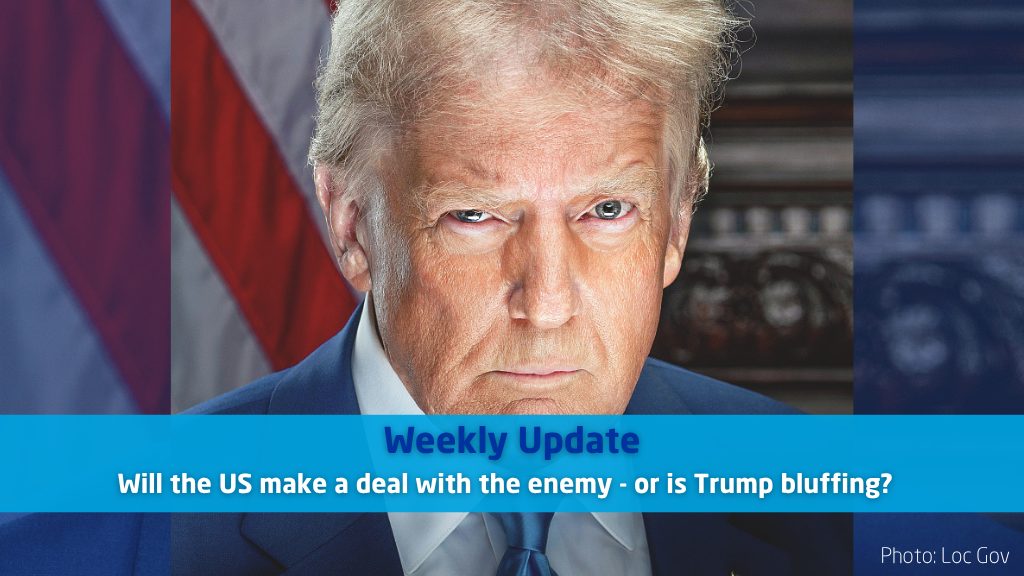
US President Donald Trump announced on Tuesday that Iran does not have to agree to a deal to end the ongoing US-Israeli war with the Islamic Republic, and stated that the United States will probably wrap up the war in two or three weeks. Trump also declared that Iran’s surviving stockpiles of enriched uranium did not concern him at all since they are buried underground and inaccessible.
Concerning the Strait of Hormuz, Trump indicated the US may end the war without first having secured safe passage of ships through the Strait. He said other countries that want to get their oil through the key waterway will have to “fend for themselves,” acknowledging that Iran could drop mines or direct machine gun and RPG fire at ships.
In the meantime, JNS reports that Saudi Arabia, the United Arab Emirates and other Gulf allies are privately pressing U.S. President Donald Trump to keep prosecuting the war against Iran, the Associated Press reported on Tuesday. They argue that a month of U.S.-led strikes has not weakened Tehran enough, according to U.S., Gulf and Israeli officials. The officials told the news agency that Saudi Arabia and the UAE are leading calls to intensify military pressure—with the Emirates favoring a ground invasion—while Oman and Qatar push for a diplomatic end to the conflict.
The United Arab Emirates is pushing for the US to forcefully reopen the Strait of Hormuz and is willing to assist in such a military operation, The Wall Street Journal reported Tuesday night. The report said the Gulf state is also seeking a UN Security Council Resolution that would green-light such an operation, as it faces continued Iranian attacks. An Emirati official told the Journal that the country’s diplomats have urged the US, along with unspecified European and Asian military powers, to establish a coalition to forcefully open Hormuz, and the UAE is looking into what military contributions it can make to help break Iran’s grip on the strait.
Lebanon
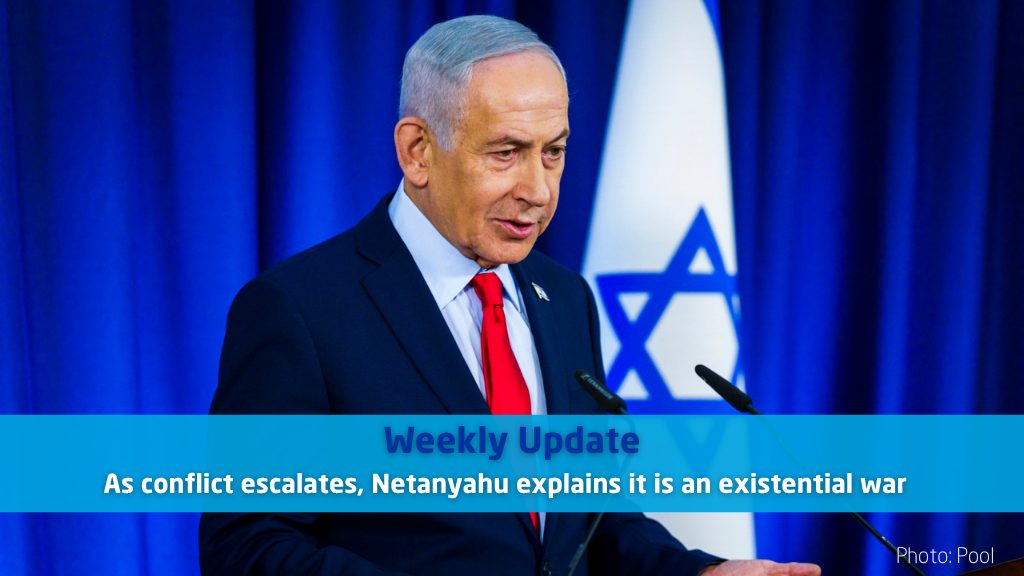
Israeli forces continue to operate in Lebanon “to protect the residents of the north and to remove direct threats against them,” Israel’s Defence Minister Katz has said, adding that troops were entering villages “with great force,” eliminating Hezbollah terrorists, destroying infrastructure and weapons and demolishing buildings used as firing positions.
“We are determined to separate Lebanon from the Iranian arena and to pull the snake’s teeth and strip Hezbollah of its ability to threaten, changing once and for all the situation in Lebanon, with an IDF security presence in the necessary places—with strict enforcement and absolute deterrence, just as in Syria and Gaza. We promised to protect the communities of the north, and that is exactly what we will do.”
Iranian-backed Hezbollah began firing rockets and suicide drones at Israel from Lebanon on March 2, in retaliation for the Jewish state’s targeted killing of Iranian Supreme Leader Ali Khamenei. Khamenei was killed in the opening strikes of “Operation Roaring Lion/Epic Fury” against the regime on Feb. 28. In response to the terrorist organization’s violation of the U.S.-brokered Nov. 27, 2024, truce agreement, Jerusalem launched an aerial campaign against Hezbollah and ordered IDF troops to advance and take control of additional areas in Southern Lebanon to halt cross-border attacks.
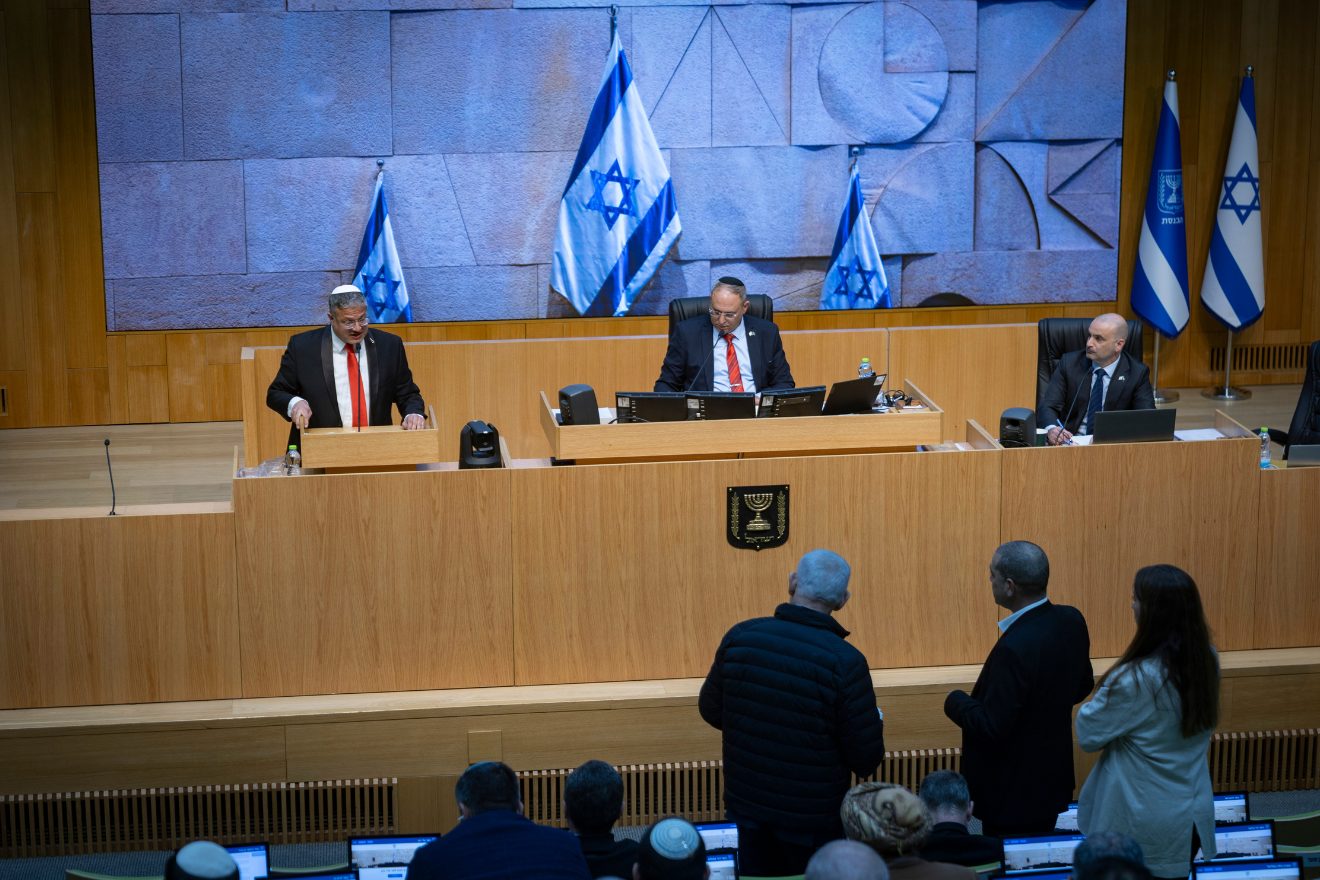
A vote on the death penalty for terrorists who murder Israeli civilians at the auditorium in the Knesset | Photo: Chaim Goldberg/FLASH90
Controversial Death penalty law adopted by Knesset in Israel
The Knesset a passed new death penalty law for terrorists on Monday night. The law reopened one of the deepest arguments in Israeli law: not only whether the state should ever execute, but whether this law was written in a way that will, in practice, apply unequally. Under the new law, death by hanging becomes the default sentence in military courts for certain lethal terror offenses, while the statute also amends Israel’s penal code in parallel.
Is Israel restricting access to the Holy Sepulcher Church?
Last Sunday Israeli police in Jerusalem prevented Latin Patriarch of Jerusalem Cardinal Pierbattista Pizzaballa and three other priests from entering the Church of the Holy Sepulcher citing Home Front Command guidelines and security concerns tied to the ongoing war with Iran.
Israel Police reported later that a coordinated security arrangement has been reached with to allow Easter observances in the Old City under restricted conditions.
According to security guidelines in place in major Israeli cities since the start of the month-old war, gatherings and services are limited to up to 50 people, provided that a shelter can be reached within 90 seconds if Red Alert sirens go off, signaling a potential rocket, missile, drone or other incoming projectile. The Old City of Jerusalem has repeatedly been hit by fragments of Iranian missiles since the joint U.S.-Israeli war began on Feb. 28, with two impacts within several hundred meters of the Temple Mount.
US Ambassador to Israel Mike Huckabee had criticized the move, calling it an “unfortunate overreach” and noting that “Home Front Command Guidelines restrict any gatherings to 50 people or fewer. The 4 representatives of the Catholic Church were well below that restriction.”
It's important to emphasize that this is an isolated incident, and in no way supports any allegation that Israel unjustifiably restricts Christian freedom of religion or worship. On the contrary, Christian holy sites and Christian freedoms in Israel are strongly protected.
Anti-Palestinian violence worsens in Judea and Samaria
Anti-Palestinian violence has flared in Judea and Samaria recent months. Israeli President Isaac Herzog on Monday condemned “the recent surge of violence by extremist elements in Judea and Samaria,” urging law enforcement to act decisively. In a letter to The London Initiative, Herzog stated that “these acts of violence stand in stark contradiction to the values upon which Israel was founded and to the enduring ethical tradition of the Jewish people.” He called on Israeli authorities to “employ all available means to bring those responsible to justice and to put an immediate end to this unacceptable phenomenon.”
This week, let us pray for the Jewish people as they celebrate Pesach. Pray that the Lord will plant them firmly in the land, and that they will be a blessing to all nations. Pray for peace between Jewish and Arab people in the land. Pray also at this Easter season that the eyes of the church will be opened to understand God’s Biblical purposes with Jews and Gentiles – the “mystery” referred to by the Apostle Paul in Romans 11.
Let us pray above all for the speedy coming of the Messiah of Abraham, Isaac and Jacob.

Weak and inadequate: Europe’s response to the Iran war
JNS: The significance of the ballistic threat is exacerbated by the capability gaps within Europe’s missile defense architecture.
Argentina designates Iran’s IRGC a terror organization
“This decision… places Argentina… at the forefront of the free world in the fight against the Iranian regime of terror and its proxies,” said Israel’s foreign minister.
Syria: Christians, Other Minorities Under Genocidal Attack During Leadership of Ahmed Al-Sharaa
Uzay Bulut at Gatestone: Christians in Syria are once again under attack by Islamic groups affiliated with the country’s jihadist regime, headed by President Ahmed al-Sharaa, a former al-Qaeda leader also known as Abu Mohammad al-Julani.
Despite the distorted media narrative, Christians thrive in Israel
Fiamma Nirenstein at JNS: Coverage of the Cardinal Pizzaballa saga overlooks the reality of religious freedom in the Holy Land.
SCRIPTURE FOR THE WEEK:
Romans 11:33-3633 Oh, the depth of the riches of the wisdom and knowledge of God! How unsearchable his judgments, and his paths beyond tracing out! 34 “Who has known the mind of the Lord? Or who has been his counselor?” 35 “Who has ever given to God, that God should repay them?” 36 For from him and through him and for him are all things. To him be the glory forever! Amen.